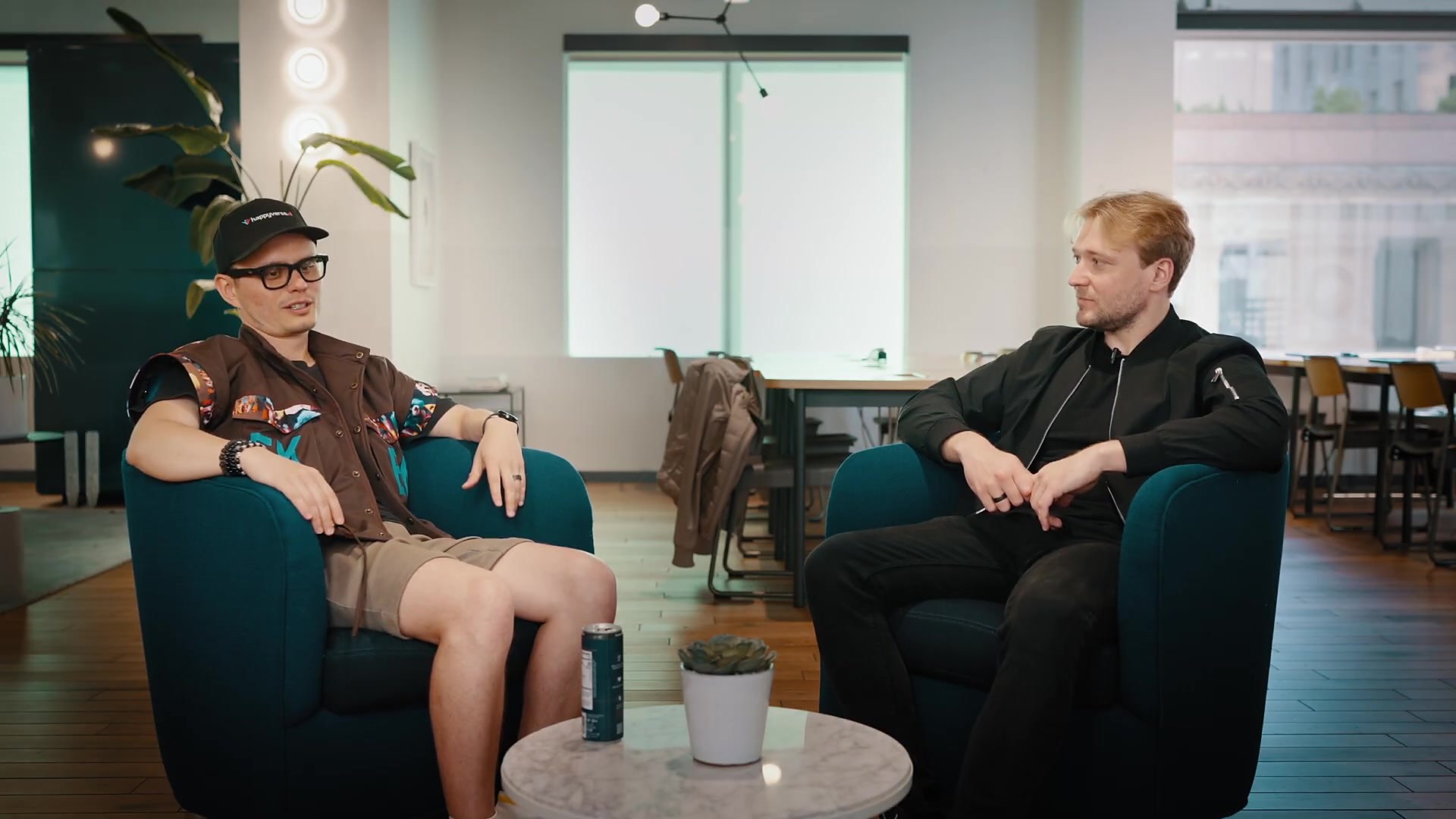
FogLine Visuals is a video production company in San Francisco that plans, films and edits video podcasts for startups and founders. The Bay Signal is our own founder podcast. Its first episode is a 37-minute conversation between our founder, Francisk Hanchar, and Max Sapo, the founder of the AI startup Happyverse. We filmed it with three cameras, professional sound and lighting in a space we rented on Montgomery Street in San Francisco, and turned that single recording into a full YouTube episode and more than 25 vertical Shorts.
At a glance
- Show
- The Bay Signal, FogLine's own founder video podcast (Built in the Fog series)
- Episode
- The Bay Signal #1
- Guest
- Max Sapo, founder of Happyverse
- Host
- Francisk Hanchar, founder of FogLine Visuals
- Location
- a rented space on Montgomery Street, San Francisco
- Cameras
- three (a wide two-shot, a close-up on the guest, a side angle on the host)
- Sound
- wireless lavalier microphones on both speakers
- Lighting
- our own lighting kit, balanced with daylight from the windows
- Episode length
- 36 minutes 44 seconds
- Delivered
- full episode with chapters, custom thumbnail, more than 25 vertical Shorts
About the guest
Max Sapo is the founder of Happyverse, a San Francisco AI startup that builds digital humans: lifelike video avatars that pair a person's likeness and voice with an AI agent. Happyverse calls them AI Confidants. Before starting the company, Max:
- earned an MBA and a Master of Science in Sustainability at Stanford University
- worked at Google as a product manager for machine learning infrastructure, on a small team that assessed the case for the large AI data-center build-out in 2019 and 2020
- worked in investment banking and private equity in Moscow
- invested as an angel in early-stage companies, including Alma, an AI platform for legal immigration
On the show, Max said Happyverse raised a pre-seed round of about $2 million from Village Global, Jeff Dean and other angel investors.
Why we filmed on Montgomery Street
Max started Happyverse in a small office around the corner, on Montgomery Street. For the recording we rented a space on the same street. The room had what a podcast set needs: tall windows, wooden floors, two teal armchairs, plants and enough depth behind the speakers to keep the background soft. We brought the cameras, microphones and lights and had the set built and tested before Max arrived.
This is how we approach location shoots for clients too. If a studio is the wrong fit, we find or book a room that suits the guest and the brand, then turn it into a set for the day.
The three-camera setup
- Camera 1, wide: a frontal two-shot that shows both speakers and the room. It sets the scene and covers moments when both people react.
- Camera 2, guest close-up: a tight shot on Max, who talks with his hands a lot.
- Camera 3, host angle: a side angle across Max toward Francisk, so the edit can follow the conversation back and forth.
Three angles keep a 37-minute conversation watchable, and they give every Short a clean vertical crop without upscaling a wide shot.
Sound and lighting
Both speakers wore wireless lavalier microphones. That keeps the frame clear of desk mics and stands, which matters when two people sit in armchairs with nothing between them but a small table. Our lights shaped the faces and balanced the daylight coming through the windows.
One recording, more than 25 Shorts
From this one episode we cut and published more than 25 vertical Shorts on the channel over about five weeks. Each clip carries a single idea and makes sense without the rest of the episode. A few examples:
- Why Google Was "Meh" at Stanford
- Founder Mode: No Windows, Just DoorDash
- Does Every Startup Need an IPO?
We use the same workflow for client shows. It's described step by step in How One Podcast Episode Turns Into 15 Short Clips.
What this means for your company's podcast
- You don't need your own studio. We can record at our studio at 855 Folsom St in SoMa, at your office, or in a space we rent for the day.
- Three cameras, proper sound and lighting are what make a conversation look like a show and not a video call.
- One hour with a founder can supply a channel with Shorts for weeks if the clips are planned together with the episode.
FAQ
See how our video podcast production in San Francisco works, take a look at our podcast studio in SoMa, or tell us about your show.
Francisk Hanchar
Founder, FogLine Visuals
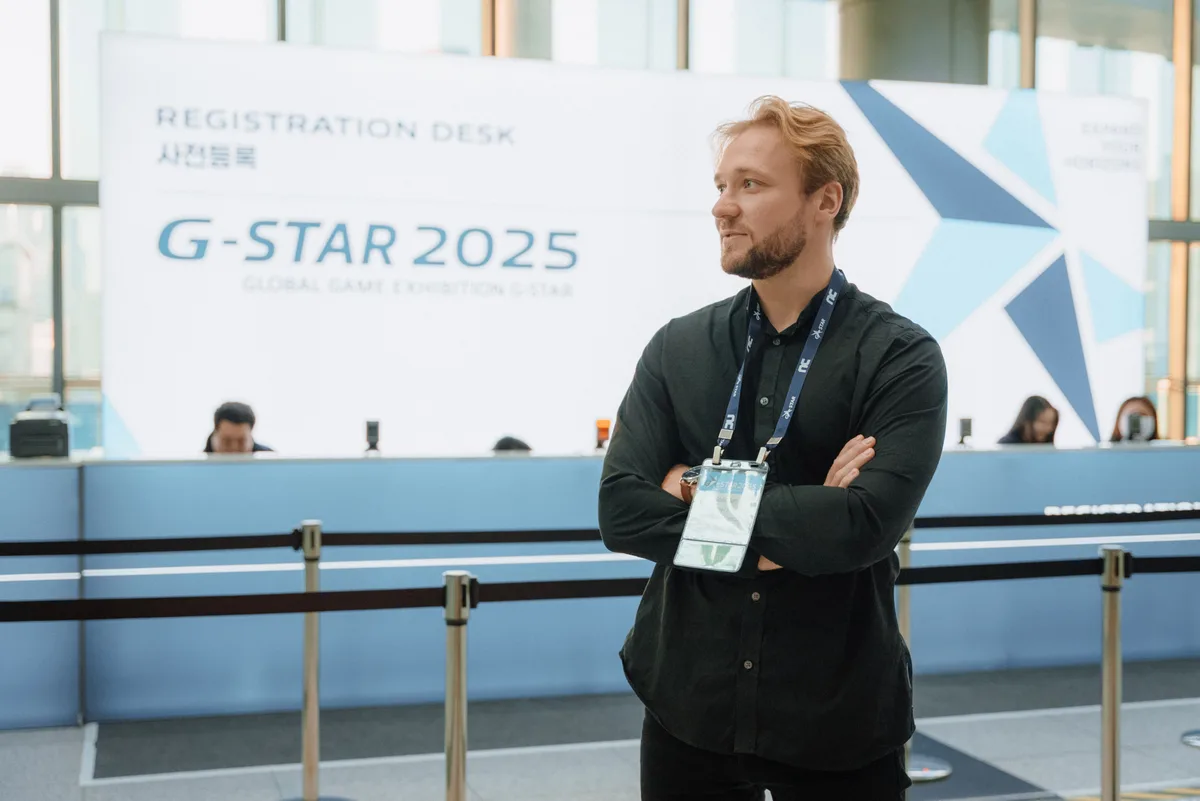
Francisk Hanchar is the founder of FogLine Visuals, a video production company in San Francisco. He produces video podcasts, launch videos and event coverage for startups, and hosts The Bay Signal.
About FogLine