FogLine Visuals is a video production company in San Francisco with its own studio at 855 Folsom St in SoMa. Shortly before Y Combinator's Summer 2026 Demo Day, the founders of Caution, a cybersecurity startup in that YC batch, asked us for one video that explains their product. We filmed a few days after the first call. In a few hours of guided interviews in our studio, CEO Anton Livaja recorded the explainer and more than 70 other videos: answers to the questions customers and investors ask most, and whiteboard walkthroughs of how the technology works. Every shot can also be cut vertically. Caution had the main video for Demo Day and a library of founder content for the months after.
At a glance
- Client
- Caution (caution.co), Y Combinator Summer 2026
- Headquarters
- George Town, Cayman Islands
- Category
- cybersecurity, verifiable confidential compute
- In the studio
- CEO Anton Livaja and co-founder Ksenia Lesko
- Deadline
- YC Summer 2026 Demo Day, September 10, 2026
- Turnaround from first call to shoot
- a few days
- Original request
- one product explainer video
- Format
- two-camera guided interview, questions asked from behind the camera, plus whiteboard walkthroughs
- Recording time
- a few hours
- Output
- the explainer plus more than 70 founder videos, including five whiteboard walkthroughs
- Framing
- horizontal masters composed for vertical crops
- Location
- FogLine studio, 855 Folsom St, SoMa, San Francisco
Who Caution is
Caution calls itself a hosting platform for software you can't afford to have hacked. Developers deploy sensitive workloads to secure enclaves in minutes, and Caution gives them cryptographic proof that what runs in production is exactly the source code, build and configuration they reviewed. That closes off whole classes of attacks: tampered builds, compromised infrastructure and runtime data theft.
In their YC launch, the founders point to the February 2025 Bybit breach, where attackers stole about $1.5 billion after compromising a single developer machine. The code that had been reviewed was not the code that was running. Caution is built so a team can prove which code is running.
- It runs today on AWS Nitro Enclaves, with Intel TDX, AMD SEV-SNP and TPM 2.0 support planned for 2026.
- It's aimed at teams where a breach is unacceptable: fintech and payments, healthcare, crypto custody, AI agents, fraud detection and secrets management.
- The company is part of Y Combinator's Summer 2026 batch and is headquartered in George Town, Cayman Islands.
The founders
- Anton Livaja, CEO. Co-founder of Distrust, a security R&D firm that designs low-level systems and confidential compute infrastructure. Before that he was on the founding team of Ledn, joined as its first software engineer and later led its information security team.
- Lance Vick, CTO. Co-founder of Distrust and a security architect who has worked on systems at BitGo, Turnkey and Unit 410, with a focus on Linux hardening, privacy and security auditing.
- Ksenia Lesko, co-founder. Leads business, product and go-to-market. Previously ran strategy and operations at Distrust.
Between them, Anton and Lance have secured systems at BitGo, Ledn, Turnkey and OpenZeppelin that protect more than $600 billion in digital assets. Their Distrust team also maintains open-source security tools such as StageX, AirgapOS and Keyfork.
The brief: one explainer, days before Demo Day
The weeks before Demo Day are the busiest of a YC batch. Caution came to us with a simple request: a video that explains the product clearly.
Francisk Hanchar, our founder, suggested going further. With our own studio, the same session that produces one explainer can also produce a library of content. So we moved at startup speed and booked the shoot a few days after the first call.
How we ran the session
- A prepared list of questions. Before the shoot we wrote down the questions customers, investors and engineers ask about Caution, from what problem it solves to how the technology works.
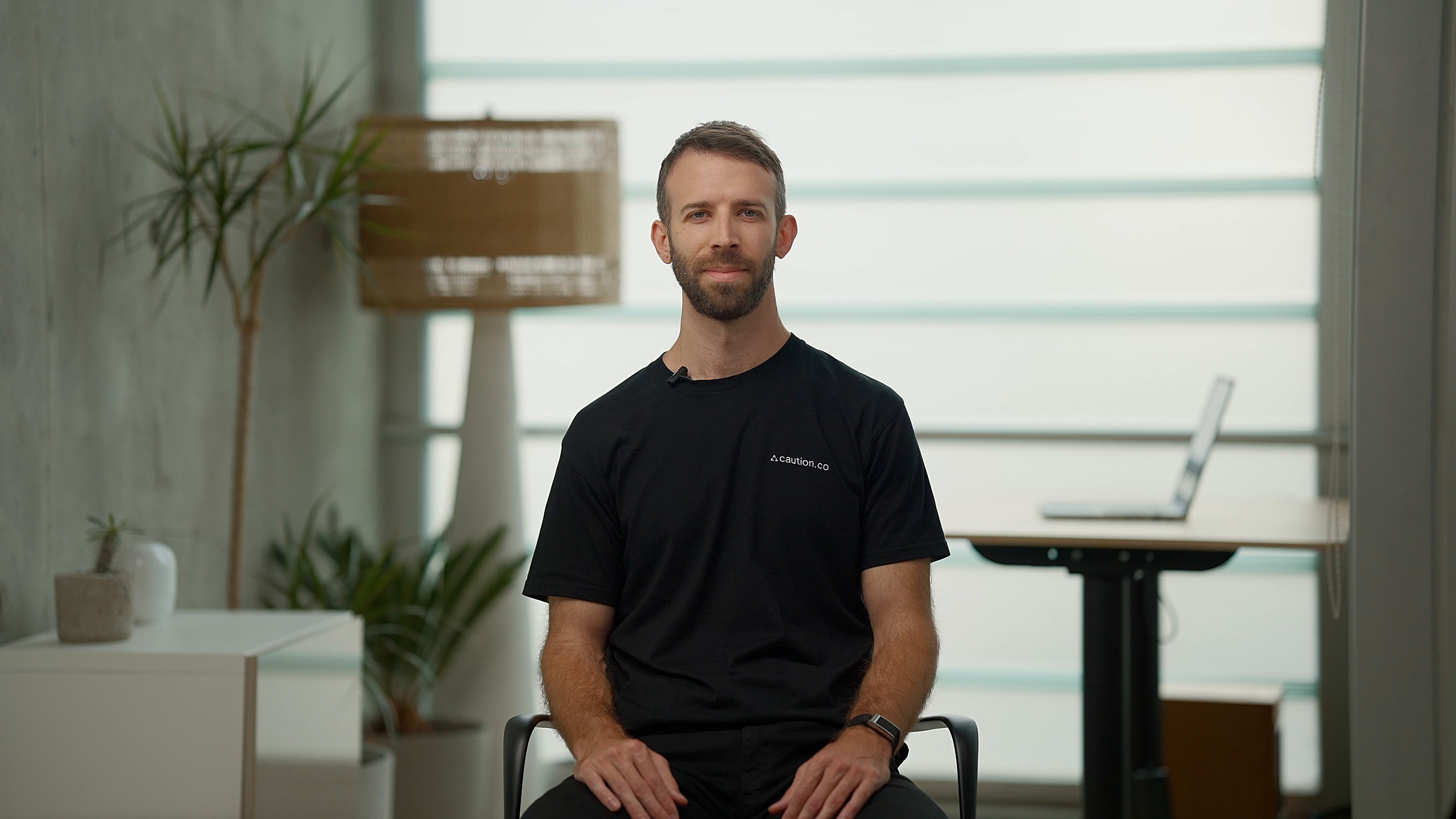
- Questions from behind the camera. Instead of asking the founder to figure out what to say to a lens, someone behind the camera asked each question and Anton answered it. A founder answering a real question sounds natural, and every answer becomes a stand-alone video.
- The explainer and the library in one sitting. The main product explainer and the full question list were recorded in the same session.
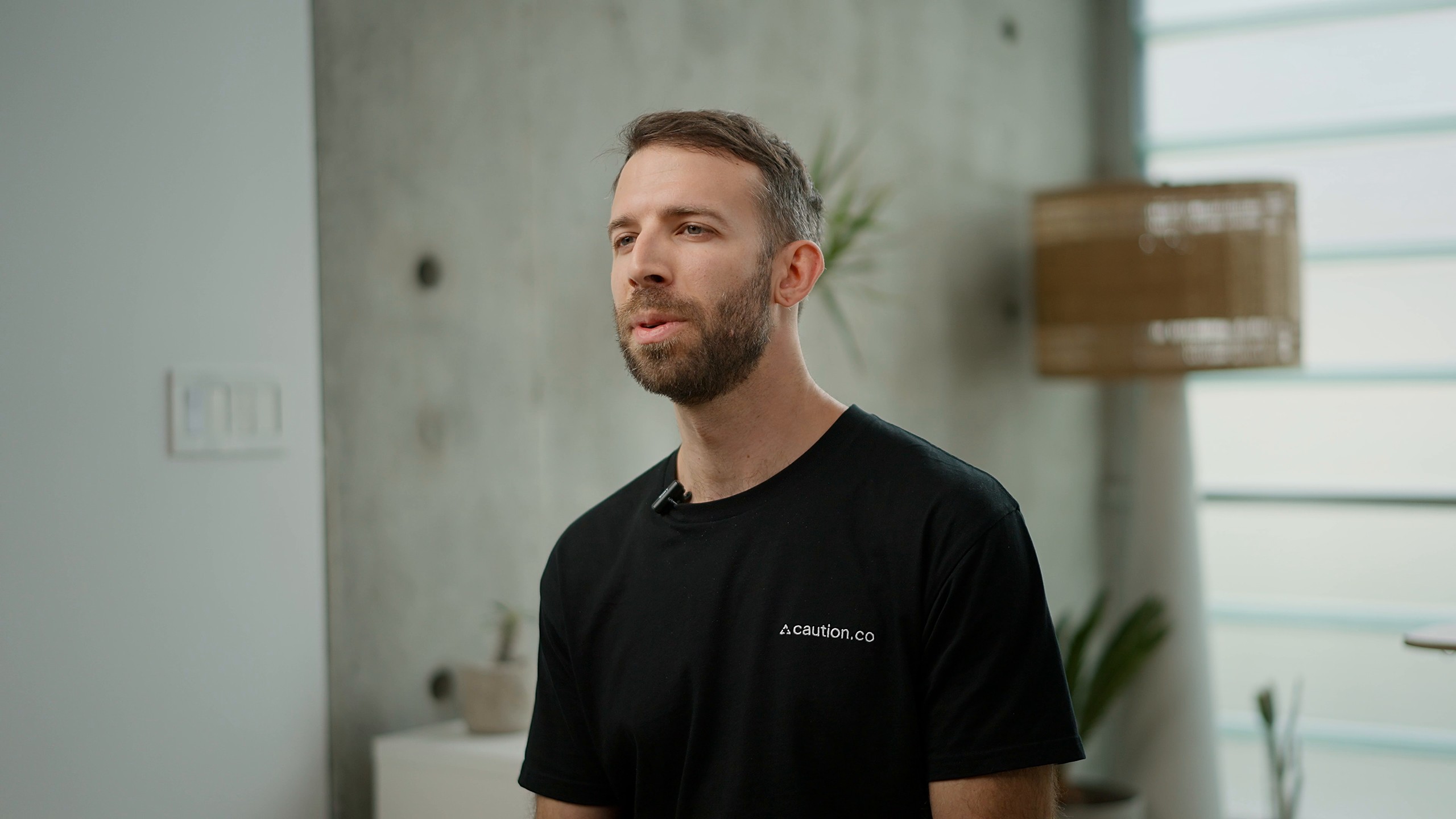
- Two angles for every answer. A wide frontal shot showed the studio, and a second camera on the side angle gave the edit a closer shot to cut to.
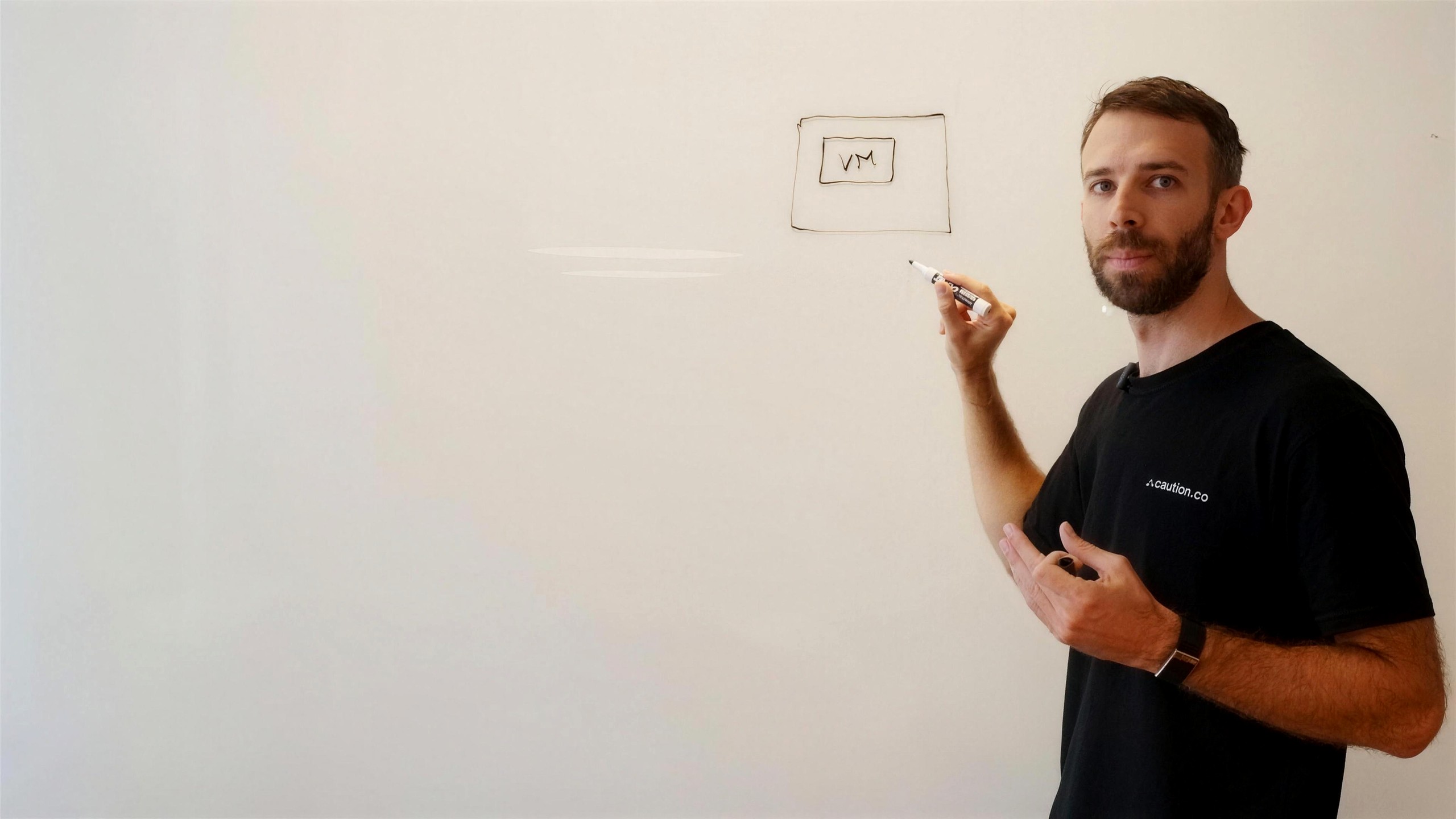
- Whiteboard walkthroughs. For the topics that are easier to draw than to explain, Anton stood at a whiteboard and sketched the system as he talked: standard deployment vs confidential compute, how remote attestation works, private AI inference, deterministic builds and the full Caution developer workflow.
- Framed for vertical. Every answer was filmed as a horizontal master with room to crop to 9:16, so it works on YouTube and as a vertical clip for LinkedIn, X and Shorts.
What one session produced
In a few hours:
- the product explainer Caution needed for Demo Day
- more than 70 videos answering the questions customers and investors ask about Caution
- five whiteboard walkthroughs of the technology
- material that can be cut into vertical clips later
The answers are grouped the way a buyer learns: introduction and foundations (what confidential and verifiable compute are), Caution and adoption, software supply chain risks, industry use cases in healthcare, fintech and AI inference, and the vision for verification.
Caution got the main video before Demo Day, plus a library of founder content to use after it.
Why guided interviews work for technical founders
Deep-tech and security founders know their product better than anyone, but a blank lens and a "just talk about it" brief usually produce stiff takes. A list of real questions, asked by someone off camera, turns the session into a conversation. The answers come out shorter and clearer, and each one maps to a question a buyer is already asking, which makes it easy to post and easy for search engines and AI assistants to match.
FAQ
Getting ready for Demo Day or a launch? See our studio in SoMa, how we make launch videos, or tell us what you need.
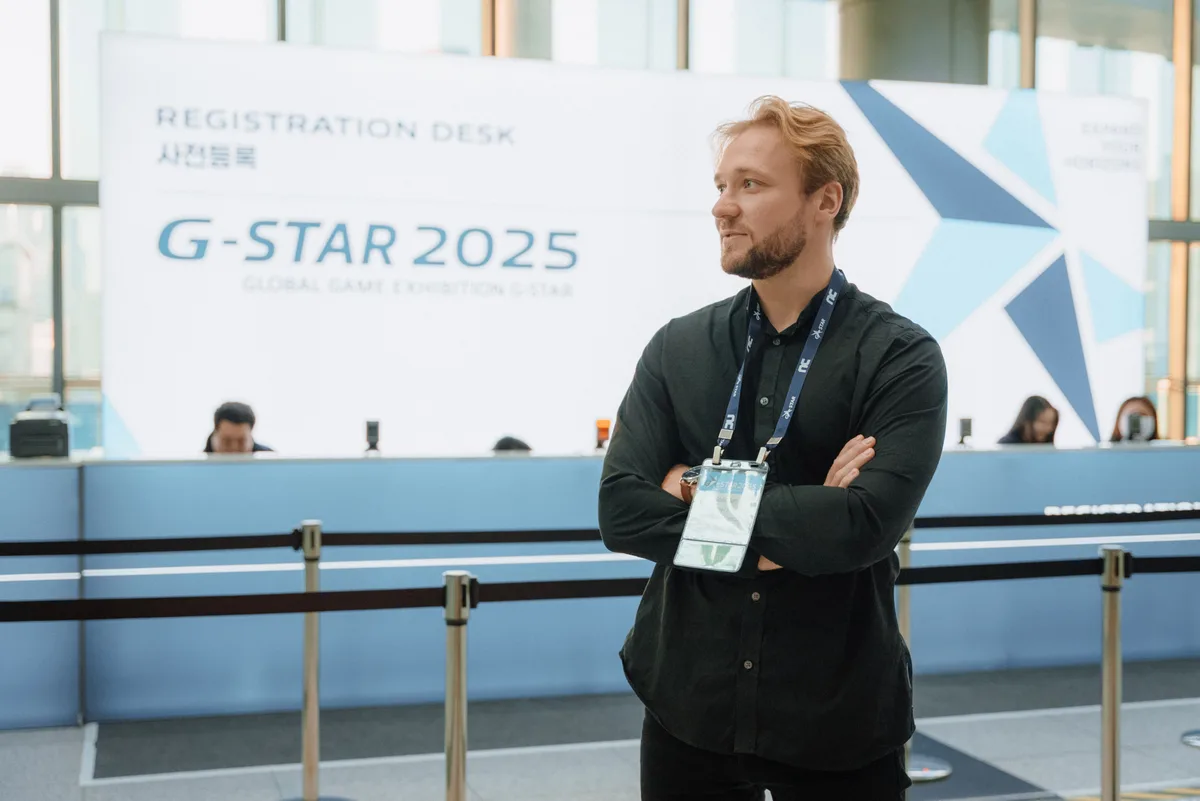
Francisk Hanchar
Founder, FogLine Visuals
Francisk Hanchar is the founder of FogLine Visuals, a video production company in San Francisco. He produces video podcasts, launch videos and event coverage for startups, and hosts The Bay Signal.
About FogLine