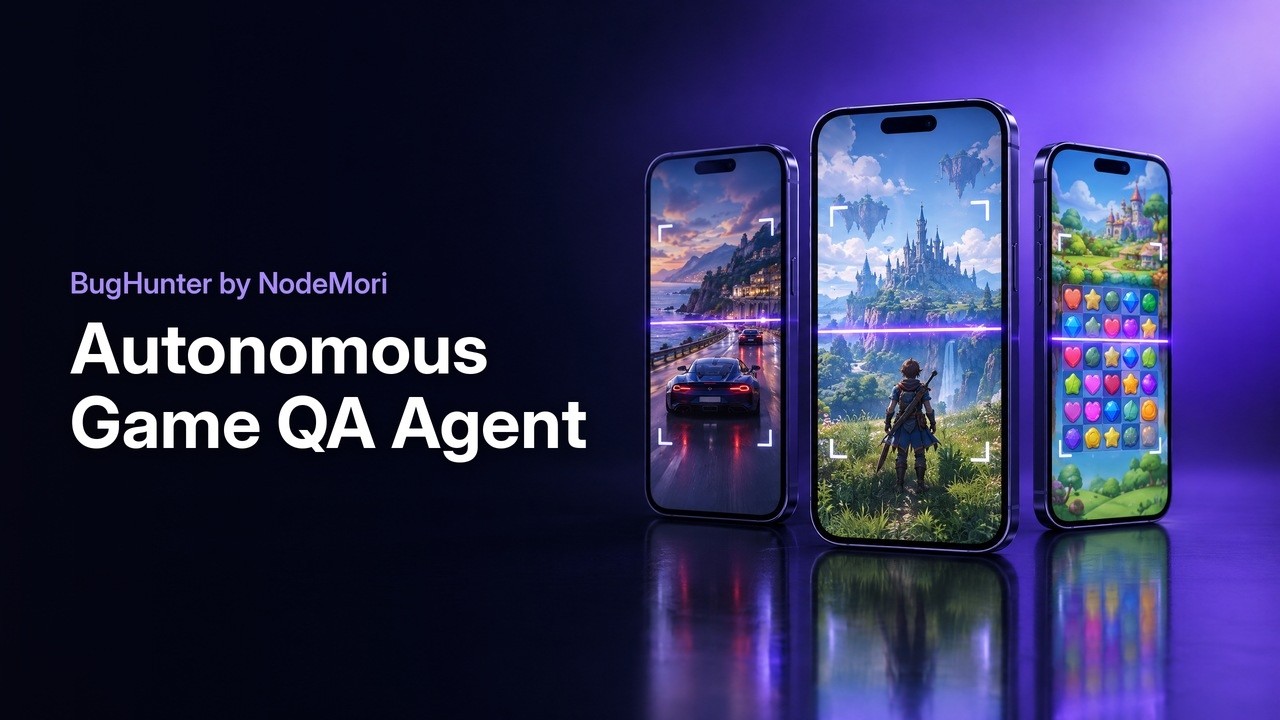
NodeMori builds AI workers for game studios. Its product, BugHunter, is an AI QA agent that plays real game builds like a player, flags broken flows and brings back video evidence of every bug. In October 2026 NodeMori released a new launch video for the autonomous version of BugHunter. FogLine Visuals produced it: our founder, Francisk Hanchar, who is also a NodeMori co-founder, presents it on camera at our studio at 855 Folsom St in SoMa, and the rest of the 69 seconds is real product footage and motion graphics.
At a glance
- Company
- NodeMori, AI workers for game studios
- Product
- BugHunter, an autonomous AI QA agent for game testing
- Video type
- founder-led product launch video with motion graphics
- Length
- 1 minute 9 seconds
- Presenter
- Francisk Hanchar, NodeMori co-founder, on camera at the FogLine Visuals studio in SoMa, San Francisco
- Visuals
- recordings of the real BugHunter interface, motion graphics and kinetic captions in NodeMori's purple palette
- Sound
- voiceover, an electronic score and interface sound effects
- Format
- 16:9 master for the website, YouTube, LinkedIn and X
- Released
- October 12, 2026, on NodeMori's YouTube channel
- Timing
- between SF Tech Week and TechCrunch Disrupt 2026
Why a new launch video now
October is the busiest month of the year for startups in San Francisco. SF Tech Week ran from October 5 to 11, with events all over the city, and TechCrunch Disrupt 2026 runs in San Francisco from October 13 to 15. NodeMori spent the season the way most early-stage teams do: at events, in meetings with game studios and investors, and pitching BugHunter again and again.
Every pitch is a test of the message. You find out which sentence makes a QA lead lean in and which question comes up every time. By October the team knew how they wanted to explain BugHunter, and the product itself had grown into an autonomous agent that a studio can hand real work to. The launch video is that explanation, recorded once and done properly, so it can do the pitching when the team is not in the room.
What changed since the first BugHunter video
NodeMori published its first BugHunter introduction in February 2026, a 49-second video with the same founder on camera. The new one is 69 seconds, and a lot moved in between:
- The opening. The first video started with a general problem: testing is slow and messy. The new one starts with a specific scene every live-game team knows: the game keeps changing, and the QA team keeps replaying the same hours of gameplay.
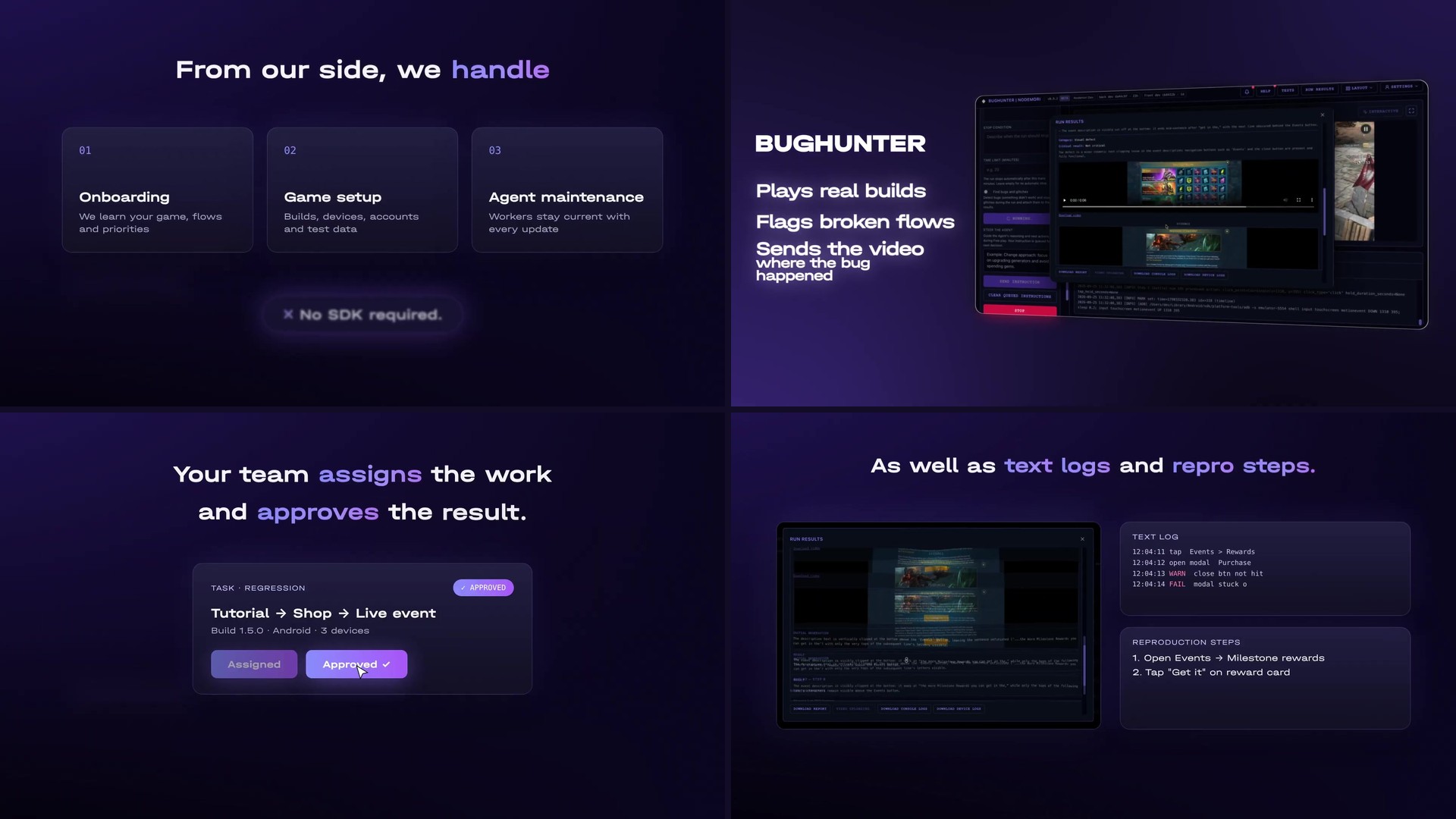
- Who does what. The new script spells out the split: NodeMori handles onboarding, game setup and agent maintenance, no SDK required; the studio's team assigns the work and approves the result.
- Real product. Instead of describing the output, the video shows the BugHunter interface playing a real build, then the run report with video, text logs and reproduction steps.
- The full loop. QA reviews the findings and sends accepted issues to Jira, developers fix them, and BugHunter tests again. Game context and QA feedback guide the next run, and through MCP a team's own AI tools can request tests and get results back.
- A smaller ask. The first video asked studios to send a slice of their game for a report. The new one asks them to start with one workflow their team repeats every release, and offers a demo run.
The 69 seconds, scene by scene
- 0:00 to 0:05, the hook. Kinetic text over a dark purple background, then a cut to Francisk at a desk: "Your live mobile game keeps changing, and your QA team keeps replaying the same hours of gameplay."
- 0:06 to 0:08, who they are. The NodeMori logo and one line: AI workers for game studios.
- 0:09 to 0:17, the product. BugHunter is introduced as an AI QA teammate that takes over test cases and long playthroughs without another hire.
- 0:18 to 0:27, who does what. Three cards for onboarding, game setup and agent maintenance, a "No SDK required" callout, and a task card that moves from draft to approved.
- 0:28 to 0:36, proof. Screen recordings of BugHunter playing a real game build and the run report with video, text logs and reproduction steps.
- 0:37 to 0:46, the loop. Francisk on camera again: QA reviews findings and sends them to Jira, developers fix, BugHunter retests.
- 0:47 to 0:54, how it learns and connects. A graph of game context and QA feedback, then an AI assistant requesting a test through MCP.
- 0:55 to 1:09, the payoff and the ask. Less time replaying tutorials, progression and shops, more time testing what's new. Then one clear call to action and the nodemori.com end card.
How we made it
The presenter parts were filmed at our studio at 855 Folsom St: a desk by the concrete wall, a laptop, a Shure broadcast microphone on an arm, plants and the window blinds behind. It's the same setup we use for founder videos and YouTube talking heads, and it's quick to get ready because the room is already built for it.
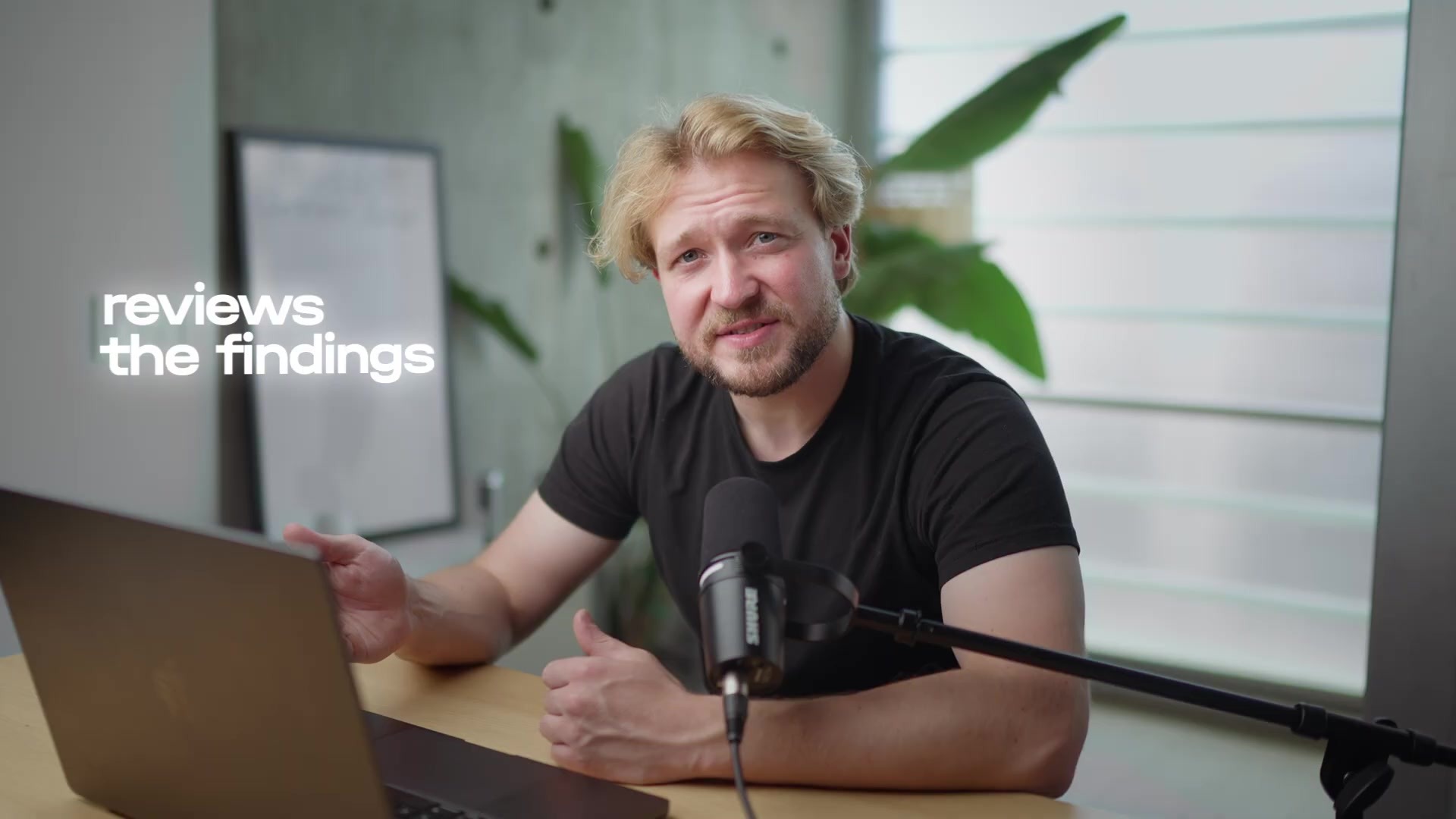
Everything else is built from the product. We recorded the real BugHunter interface, then designed motion graphics in NodeMori's dark purple palette around it: cards for the onboarding steps, a task that changes state, a retest loop and the MCP terminal. Most spoken lines also appear on screen as kinetic text, so the video still works on LinkedIn and X, where many people watch with the sound off.
What a launch video for a B2B AI product needs
BugHunter's video follows a structure we recommend to most AI and SaaS founders:
- Open with the customer's pain in their own words, in the first five seconds.
- Say who you are in one line.
- Show what the product does in the real interface, not in stock footage.
- Spell out who does what: what you handle and what the customer's team still owns.
- Show how it fits the tools the buyer already uses.
- End with one small, clear next step.
- Keep it under about 90 seconds and caption every line.
FAQ
See how our launch video production works, watch more founder-led launch videos, request a custom launch quote.
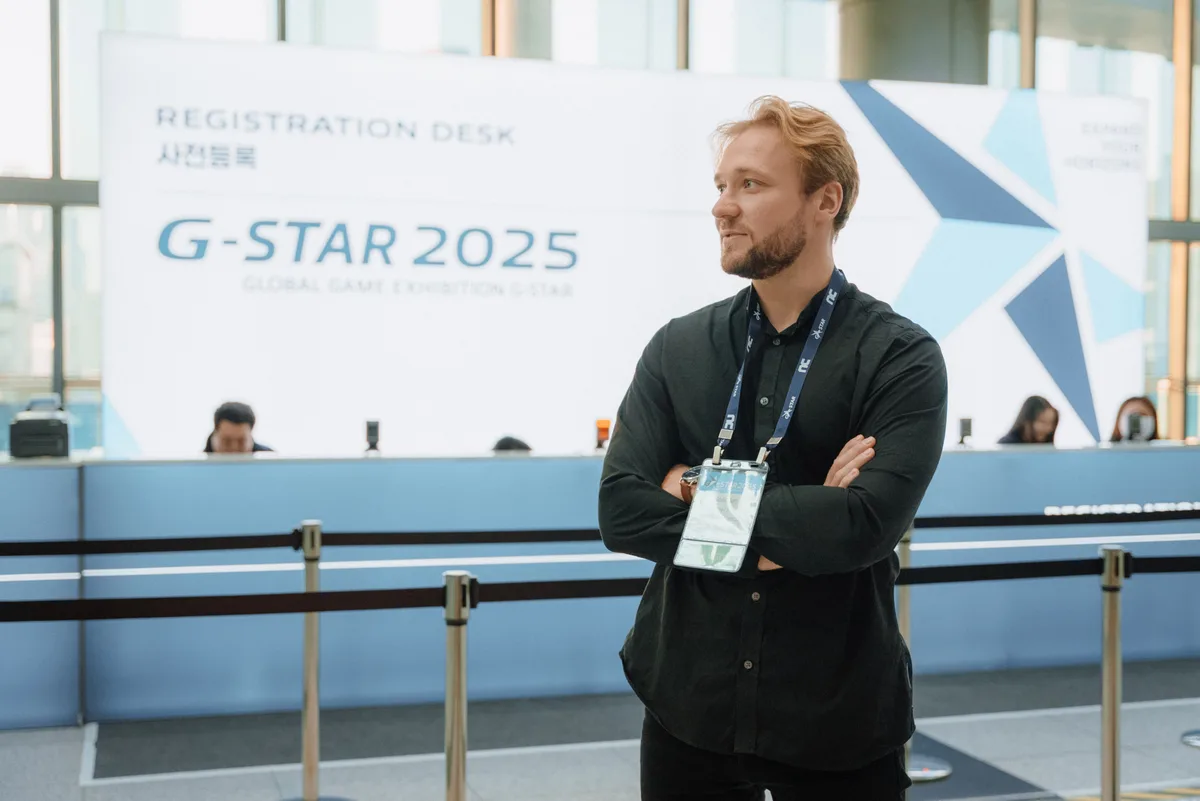
Francisk Hanchar
Founder, FogLine Visuals
Francisk Hanchar is the founder of FogLine Visuals, a video production company in San Francisco. He produces video podcasts, launch videos and event coverage for startups, and hosts The Bay Signal.
About FogLine