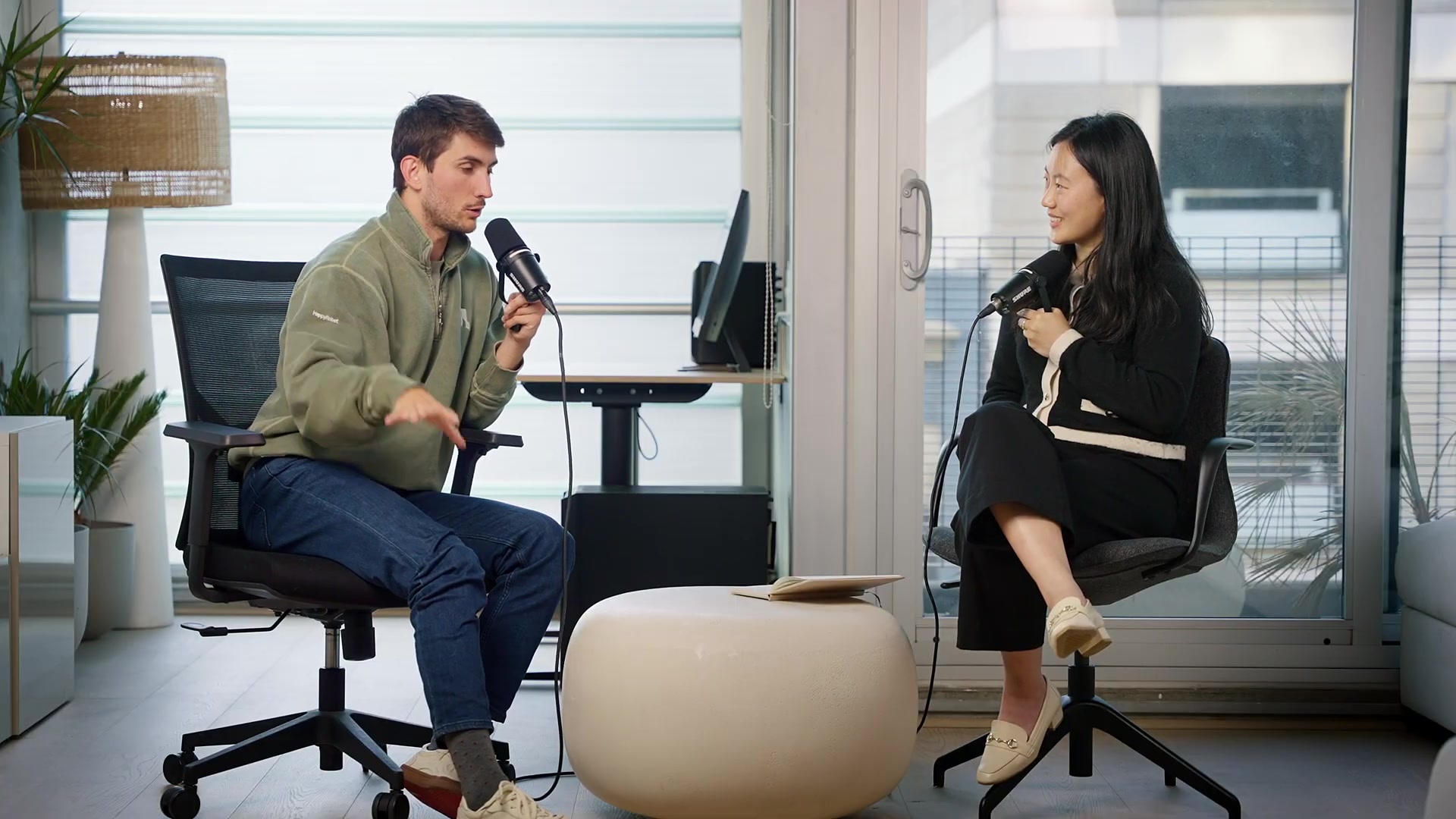
The Last Mile is Contour AI's video podcast about forward deployed engineering, hosted by Contour's founder and CEO Ivory Tang. FogLine Visuals, a video production company in San Francisco, produces the whole series. This episode, with HappyRobot co-founder and CEO Pablo Palafox, was recorded at our studio at 855 Folsom St in SoMa. It runs just over an hour, opens with a fast teaser of the best answers, and fed Contour's feeds with a new clip almost every day for ten days after release.
At a glance
- Show
- The Last Mile, Contour AI's founder-hosted video podcast
- Client
- Contour AI
- Host
- Ivory Tang, founder and CEO of Contour AI
- Guest
- Pablo Palafox, co-founder and CEO of HappyRobot
- Location
- FogLine Visuals studio, 855 Folsom St, SoMa, San Francisco
- Cameras
- three (a wide two-shot and a close-up on each speaker)
- Sound
- handheld dynamic microphones for both speakers
- Lighting
- softbox key lights balanced with window daylight
- Episode length
- 1 hour 3 minutes
- Delivered
- full episode with a teaser montage and 16 chapters, plus vertical clips for YouTube Shorts, X and LinkedIn
About the guest
Pablo Palafox is the co-founder and CEO of HappyRobot, which describes itself as the AI operating system for supply chain and logistics. The company started with voice agents that call truck drivers to check where a delivery is and agents that negotiate freight rates, and now works with companies in logistics, telecom, energy and utilities, and financial services.
In the episode Pablo tells how it began: he was doing a PhD in computer vision in Munich, left to build a company with his co-founders, was turned down by Y Combinator the first time and got into the Summer 2023 batch with, as he puts it, maybe $70,000 in revenue. According to the episode description, HappyRobot has since passed a billion-dollar valuation and grown its deployment team from 25 to 60 forward deployed engineers in under two years.
What the episode covers
- "We didn't know we were doing FDE" (02:28). Pablo was simply sitting next to logistics operators and making the agents work for them. Only later did that have a name.
- Everyone is a forward deployed engineer (05:00). HappyRobot has no solutions engineers and no split between pre-sales and post-sales. One deployments team owns both, with a simple mandate: scope and build.
- The million-dollar rule of thumb (09:34). HappyRobot puts FDEs on an account when the contract should reach about a million dollars, as a land or an expansion, within the first 12 to 18 months. If deal sizes are around $30K and never grow, he says, don't run an FDE motion at all.
- Killing the pods (10:21) and the titles. Vertical pods were dropped so nobody "owns" an industry, and the team stays flat. Coaches are called commanders and the engineers astronauts (12:35).
- "Playbooks are poison" (18:51). Frameworks yes, copy-paste playbooks no, because no two enterprise deployments look the same.
- Customize every demo (27:34). The team researches a prospect and builds a quick, hacky version with realistic fake data, sometimes before the first meeting.
- No commission for FDEs (41:47) and FDE cost counted as R&D plus cost of acquisition, not cost of goods sold (46:46).
How we produced it
Of the first three episodes, Pablo's is the one we recorded in our own space. The studio at 855 Folsom St is a concrete loft with big windows. For The Last Mile we used the daytime setup: two black mesh chairs facing each other across a low white ottoman, a rattan floor lamp, plants, and the windows behind. Softbox key lights keep the faces even while the daylight does the rest.
Both speakers used handheld dynamic microphones. Ivory and Pablo hold the mic close the whole time, which keeps the room sound out and gives the conversation the feel of a talk show rather than a meeting. Three cameras cover it: a wide two-shot and a close-up on each speaker.
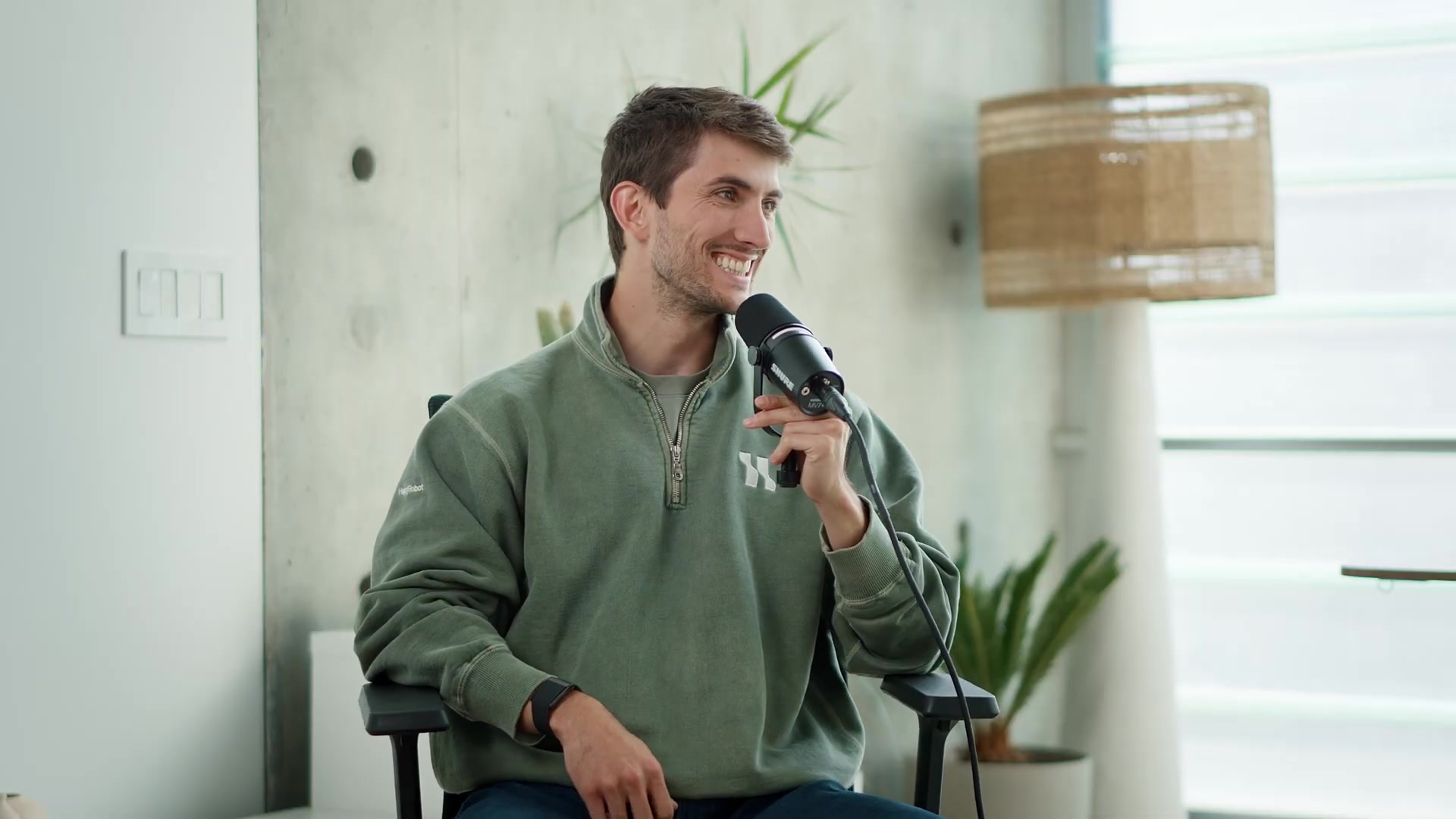
The episode opens with a minute-long montage before the welcome: Ivory's sharpest questions cut together with Pablo's answers, ending with his advice to a founder scaling an FDE team, "keep it super, super flat." Only then does Ivory introduce the guest. After release, a new vertical clip from the conversation went out almost every day for ten days on YouTube Shorts, X and LinkedIn.
Why record a guest like this in a studio
- Founders and CEOs have little time. In a studio the set is lit, framed and tested before they arrive, so they walk in and start talking.
- A studio gives every episode the same look, which helps a series feel like a show.
- Handheld mics and close-ups give the editor clean material for vertical clips.
FAQ
See how our video podcast production works, take a look at our studio in SoMa, read how the whole series works, or tell us about your show.
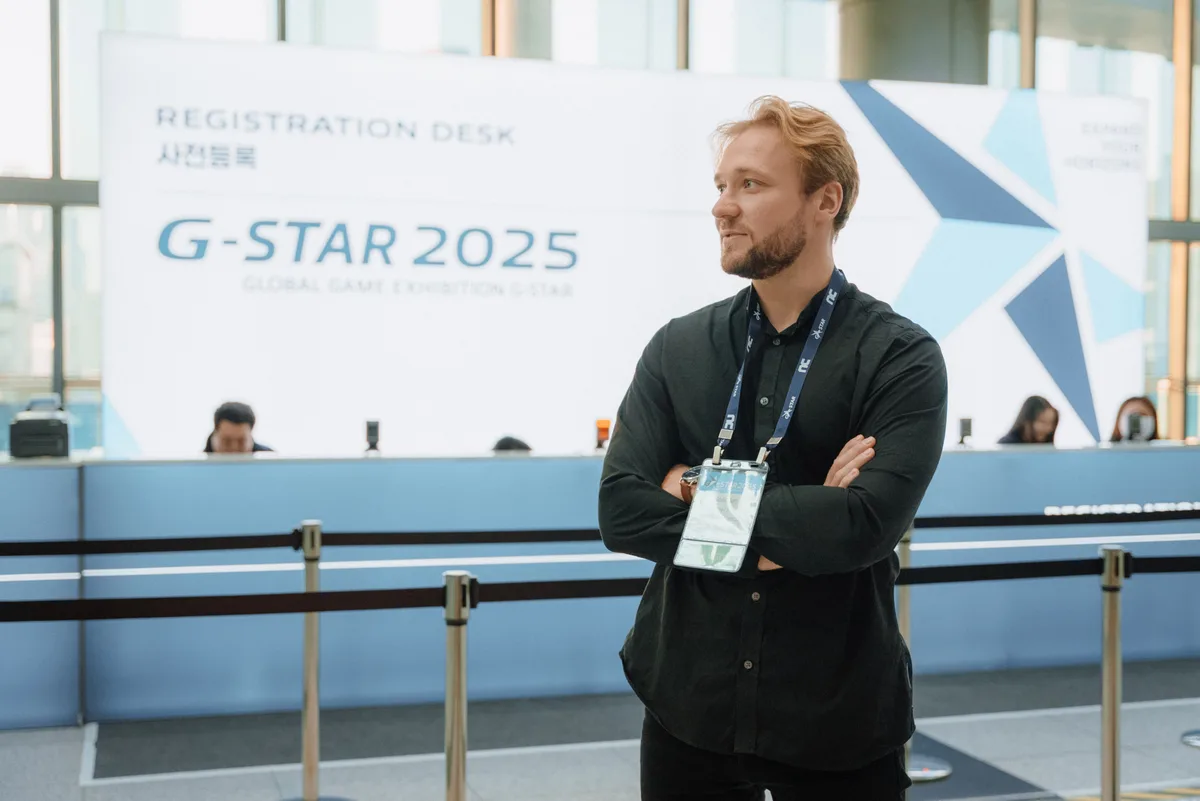
Francisk Hanchar
Founder, FogLine Visuals
Francisk Hanchar is the founder of FogLine Visuals, a video production company in San Francisco. He produces video podcasts, launch videos and event coverage for startups, and hosts The Bay Signal.
About FogLine