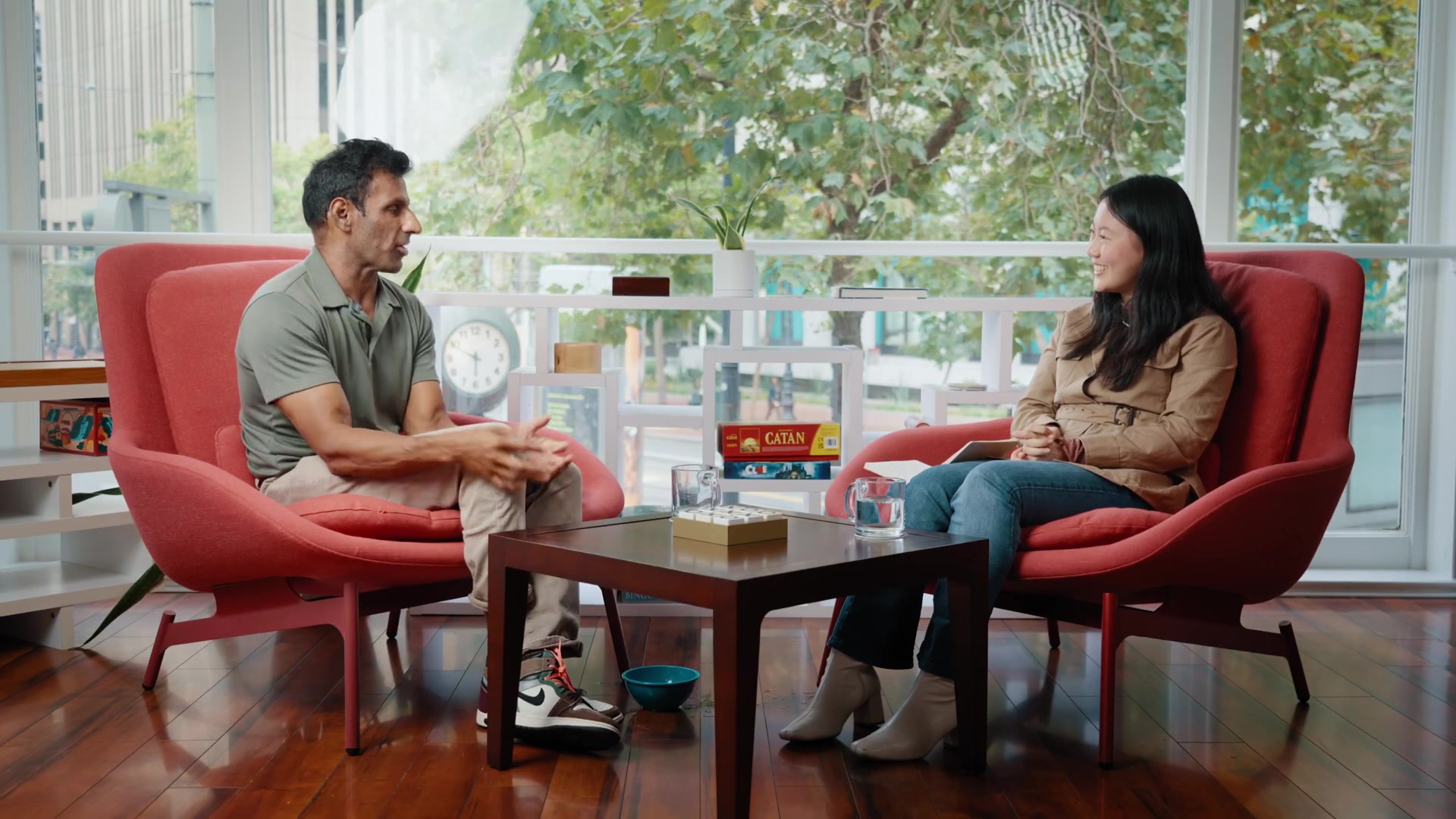
The first episode of The Last Mile set the tone for the series. Contour AI's founder and CEO Ivory Tang interviewed Nick Mehta, the former CEO of Gainsight and one of the people behind the customer success category, about what comes after it. FogLine Visuals filmed the episode on location in a bright room with coral armchairs and tall windows. It runs 47 minutes, and its title sums up the argument: from CSM to FDE.
At a glance
- Show
- The Last Mile, Contour AI's founder-hosted video podcast
- Client
- Contour AI
- Episode
- the first episode of the series
- Host
- Ivory Tang, founder and CEO of Contour AI
- Guest
- Nick Mehta, former CEO of Gainsight
- Location
- on location, a sunlit room with coral armchairs, wooden floors and tall windows
- Cameras
- three (a wide two-shot and a close-up on each speaker)
- Sound
- wireless lavalier microphones on both speakers
- Lighting
- natural daylight from the windows
- Episode length
- 47 minutes
- Delivered
- full episode with a teaser and 17 chapters, plus vertical clips for YouTube Shorts, X and LinkedIn
About the guest
Nick Mehta led Gainsight, the customer success software company, from its launch in 2013 through August 2025. According to the episode description, he grew it to more than 1,400 employees before its $1.1 billion acquisition by Vista Equity Partners, and he is widely credited as one of the creators of the customer success category. He recently co-founded Dear CC, the New Work Foundation's media and data platform for job seekers, with Clara Shih.
So the question at the center of the episode lands with him: if forward deployed engineers are the new customer-facing role, what happens to customer success?
What the episode covers
- From CSM to FDE (14:38). A customer success manager could only advise the client. An FDE goes in and makes the software work in the client's environment. Nick thinks FDE may be the next evolution of the role.
- Professional services vs forward deployed engineers (17:41). FDE is treated as a strategic function rather than a cost to minimize, it's more technical, and it comes with a point of view rather than just taking orders.
- The landmines of scaling a deployment team (21:26): matching headcount to spiky demand, big differences between individual engineers, burnout from weekly travel, and one-off builds nobody can maintain later.
- Trust as the differentiator (26:23). Enterprises overwhelmed by AI options tend to go with the vendor whose people seem to understand their problem and care about it.
- Systems integrators (31:57). "Customers want to buy outcomes, not hours", while the SI business is built on hours.
- Product vs service (34:40, 38:12). Do whatever every client asks and you are a consulting firm. Ship only packaged software and you get commoditized. Nick passes on a line he heard from an investor: the culture has to be McKinsey plus Stripe.
- What makes a great FDE (40:53): curiosity, empathy for the customer's problem, research done ahead of time and a hypothesis to test.
How we produced it
For the first episode we filmed on location rather than at our studio. The room did a lot of the work: two coral armchairs and a low wooden table on a dark wood floor, shelves with board games, a big plant, and tall windows with trees outside. We shot it in daylight, with three cameras: a wide two-shot that shows the whole room, and a close-up on each speaker.
Both speakers wore wireless lavalier microphones, so the armchairs stay free of mic stands and the shot looks like a conversation in a living room.
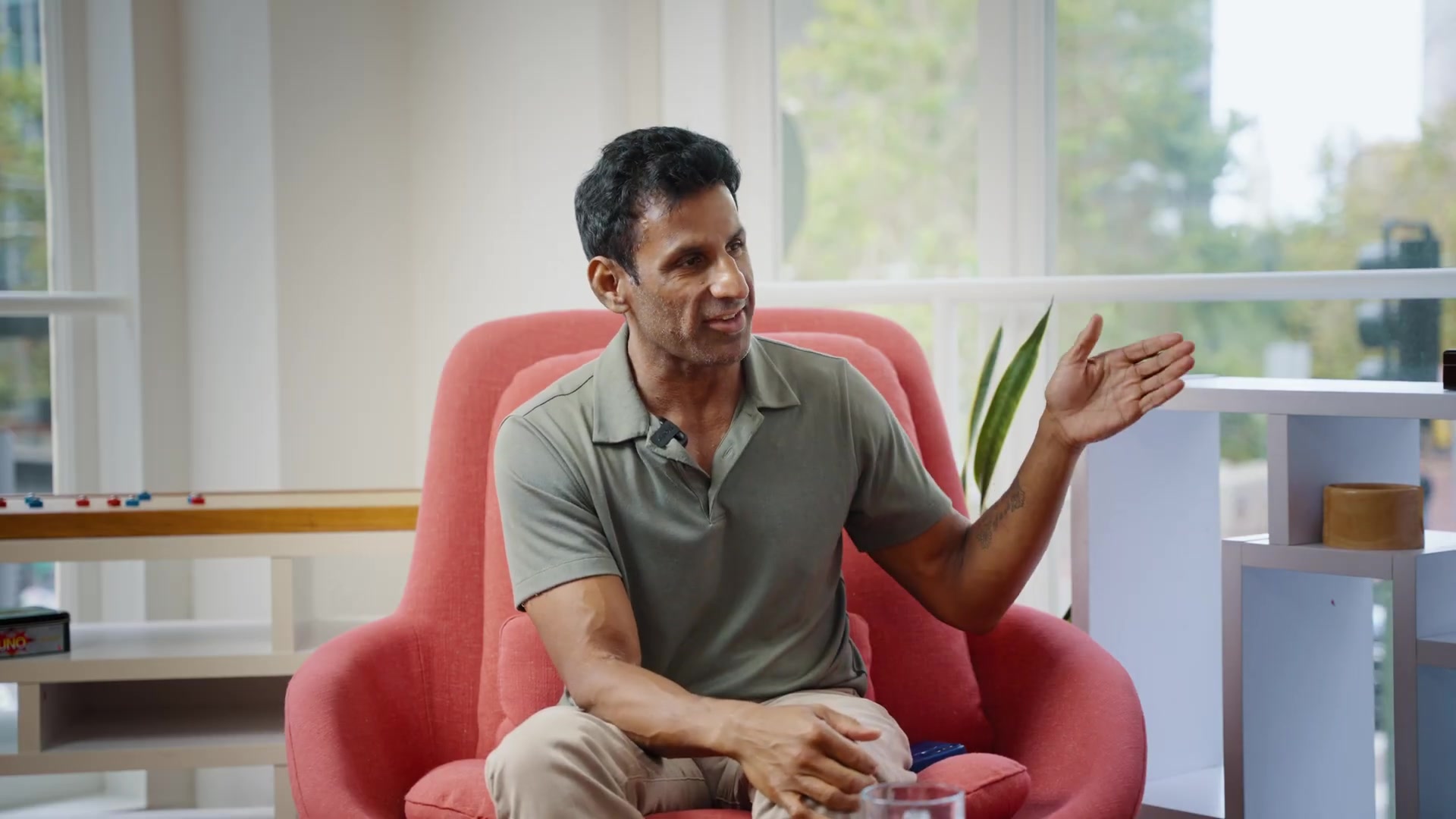
The episode opens with four of Nick's strongest lines cut together, including "that person gets my business" and "customers want to buy outcomes, not hours." Then came the moment nobody planned: Nick's dog, Snickerdoodle, burst into the room during the welcome. We kept it in, and the first chapter even has his name in it. A moment like that does more for a first episode than a perfect take.
What the first episode set up for the series
- A narrow topic: forward deployed engineering, for the people who build and run those teams.
- A recognizable format: a teaser of the best lines, a proper introduction, then the interview.
- Guests the audience already follows, starting with someone who helped create a whole category.
FAQ
See how our video podcast production works, take a look at our studio in SoMa, read how the whole series works, or tell us about your show.
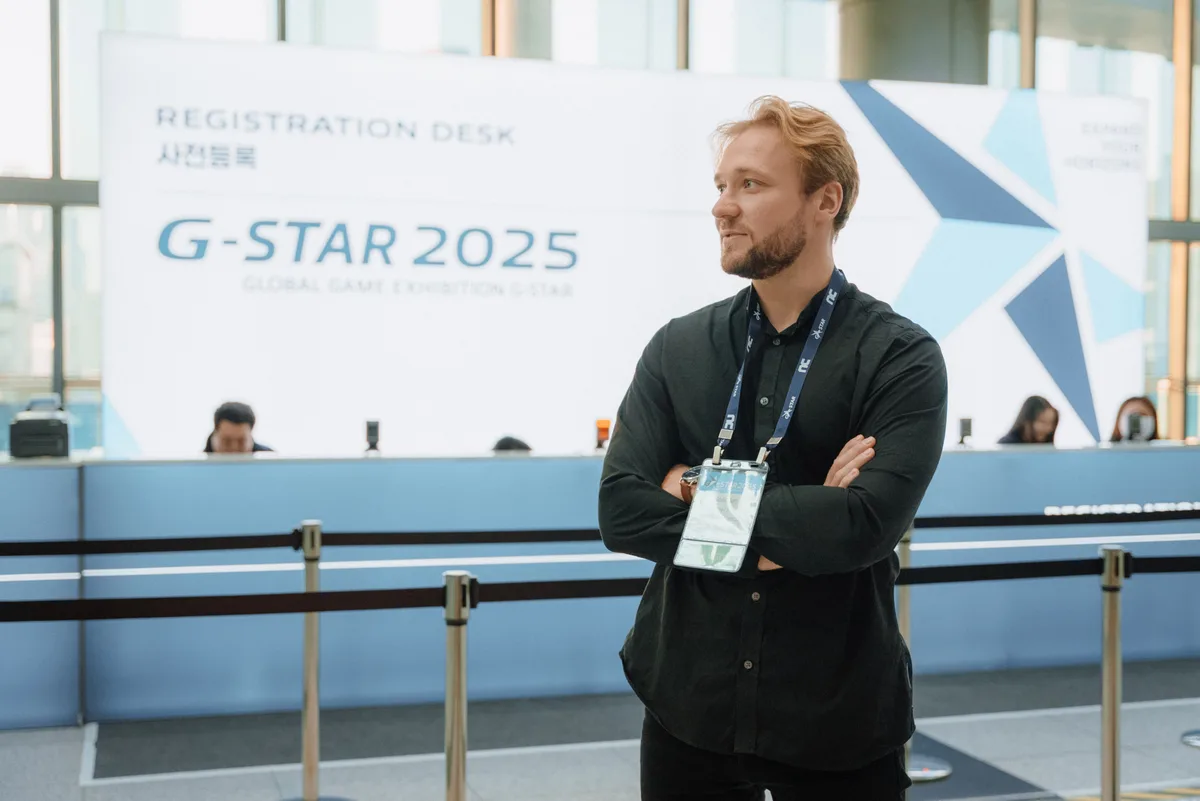
Francisk Hanchar
Founder, FogLine Visuals
Francisk Hanchar is the founder of FogLine Visuals, a video production company in San Francisco. He produces video podcasts, launch videos and event coverage for startups, and hosts The Bay Signal.
About FogLine