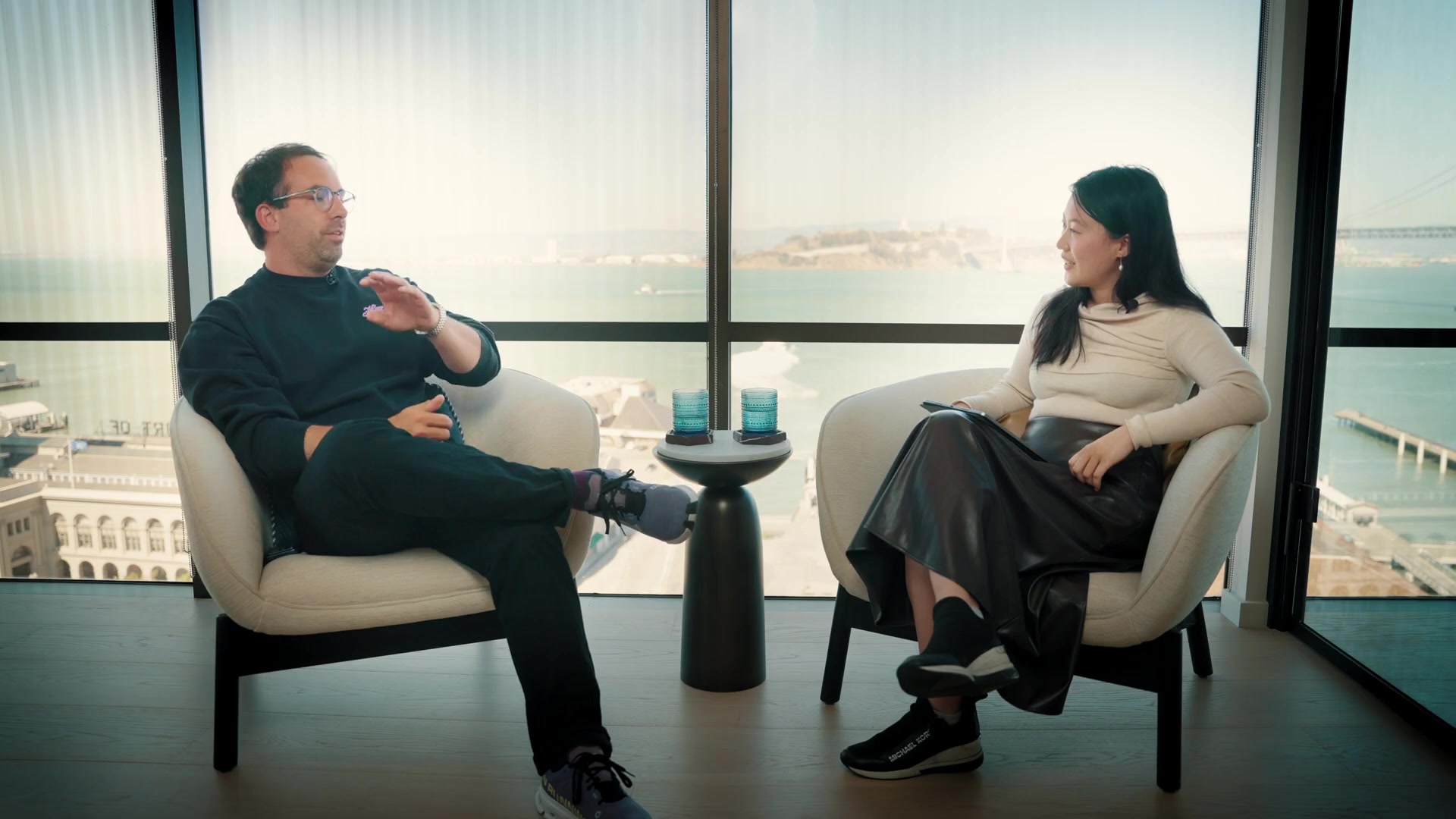
For this episode of The Last Mile, the video podcast we produce for Contour AI, host Ivory Tang sat down with Barry McCardel, co-founder and CEO of Hex. FogLine Visuals filmed it on location, in a high-floor room with floor-to-ceiling windows over San Francisco Bay, with the Bay Bridge and the Ferry Building clock tower in the frame. The conversation runs about an hour and is one of the most quotable in the series, starting with the title question: are your FDEs just sparkling sales engineers?
At a glance
- Show
- The Last Mile, Contour AI's founder-hosted video podcast
- Client
- Contour AI
- Host
- Ivory Tang, founder and CEO of Contour AI
- Guest
- Barry McCardel, co-founder and CEO of Hex
- Location
- on location in San Francisco, a high-floor room with windows over the Bay
- Cameras
- three (a wide two-shot and a close-up on each speaker)
- Sound
- wireless lavalier microphones on both speakers
- Lighting
- daylight from the windows, exposed for faces and view
- Episode length
- 1 hour 2 minutes
- Delivered
- full episode with a teaser and 18 chapters, plus vertical clips for YouTube Shorts, X and LinkedIn
About the guest
Barry McCardel is the co-founder and CEO of Hex, an AI-native workspace for data science and analytics. According to the episode description, Hex is used by companies such as Reddit, Notion, Figma and Anthropic. Before Hex, Barry spent four years as a deployment strategist at Palantir, where he met his two co-founders, after two years in consulting. Part of his Palantir time went to upstream oil and gas, sitting in on customer teams' meetings.
That background is why the episode works. Barry knows the Palantir version of forward deployed engineering from the inside, and then built a company that deliberately has no FDE team.
What the episode covers
- Palantir's Contour (01:11). A coincidence the host enjoys: Palantir once had an internal tool called Contour, built by a few FDEs to solve one customer's problem. It spread from deployment to deployment with no central roadmap.
- Real FDE vs "sparkling sales engineering" (04:21, 07:19). In Barry's definition, forward deployed engineering means discovering what product to build. Using engineers to speed up adoption of a product you already have is something else.
- The airline status test (09:02). Do the people opening pull requests into the core product travel enough to have airline status?
- R&D, not cost of goods sold (12:42). If you really run an FDE motion, you book that time as R&D. Treat it as COGS and it is just implementation.
- The 18 browser tabs story (19:16). An on-site visit showed a user keeping 18 tabs of the old tool open, with Hex last. His advice: before writing code, go on site and just listen.
- Process cuts the tail risk and the tail upside (31:42), and what FDE really costs at scale (33:47): lots of projects that go nowhere, paid for by the few that spread.
- "That's not cheap enough" (41:31). His story about an enterprise executive turning down free engineers from an AI lab.
- Why Hex has no FDEs (50:27) and how it prices (53:56): seats plus usage, without marking up tokens.
How we produced it
The location sells this episode. Two cream armchairs and a small black side table face each other in front of glass from floor to ceiling, and behind them the Bay Bridge, the water and the Ferry Building. The hard part with a room like this is the windows: the view is the reason to film there, so the exposure has to hold both the faces and the Bay without the background turning white. The wide shot keeps the water between the two chairs, and the close-ups are tight enough that the city stays a soft backdrop.
Both speakers wore wireless lavalier microphones, which keeps the frame clean. Nothing stands between the chairs except the side table, and the view stays open. Three cameras cover the conversation: the wide two-shot and a close-up on each speaker.
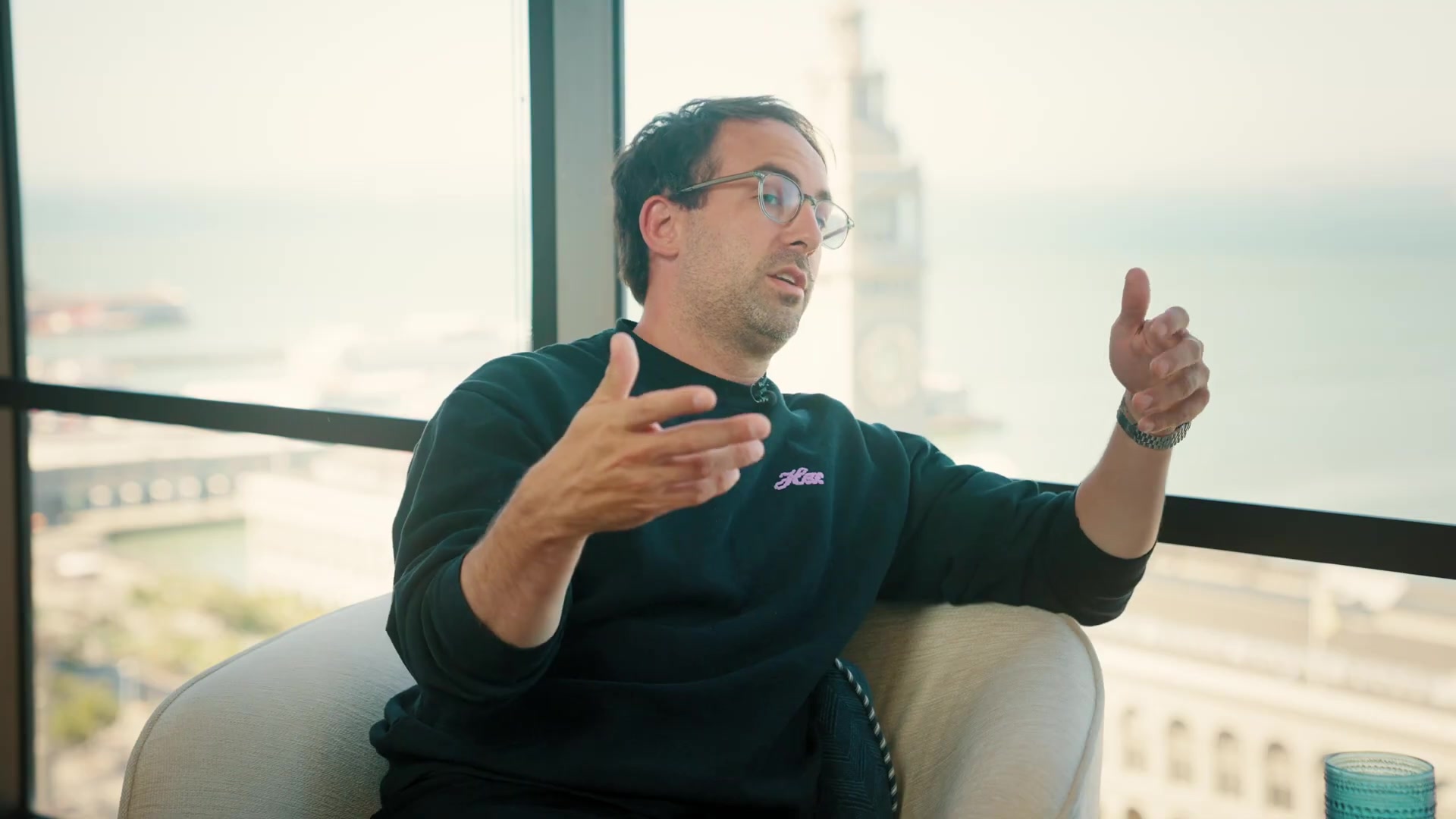
The episode opens with three of Barry's lines cut together before Ivory's introduction: FDE time as R&D, the browser tabs, and why enterprise will be hard for the AI labs. Viewers know within half a minute what kind of conversation this is.
Filming a podcast on location in San Francisco
- Pick the room for the window, then plan the exposure around it. A view of the Bay is worth it only if faces stay readable.
- Lavalier mics suit locations with a view: there is no desk and no mic stand in the shot.
- Scout before the shoot day, so the set is lit, framed and tested before the guest walks in.
FAQ
See how our video podcast production works, take a look at our studio in SoMa, read how the whole series works, or tell us about your show.
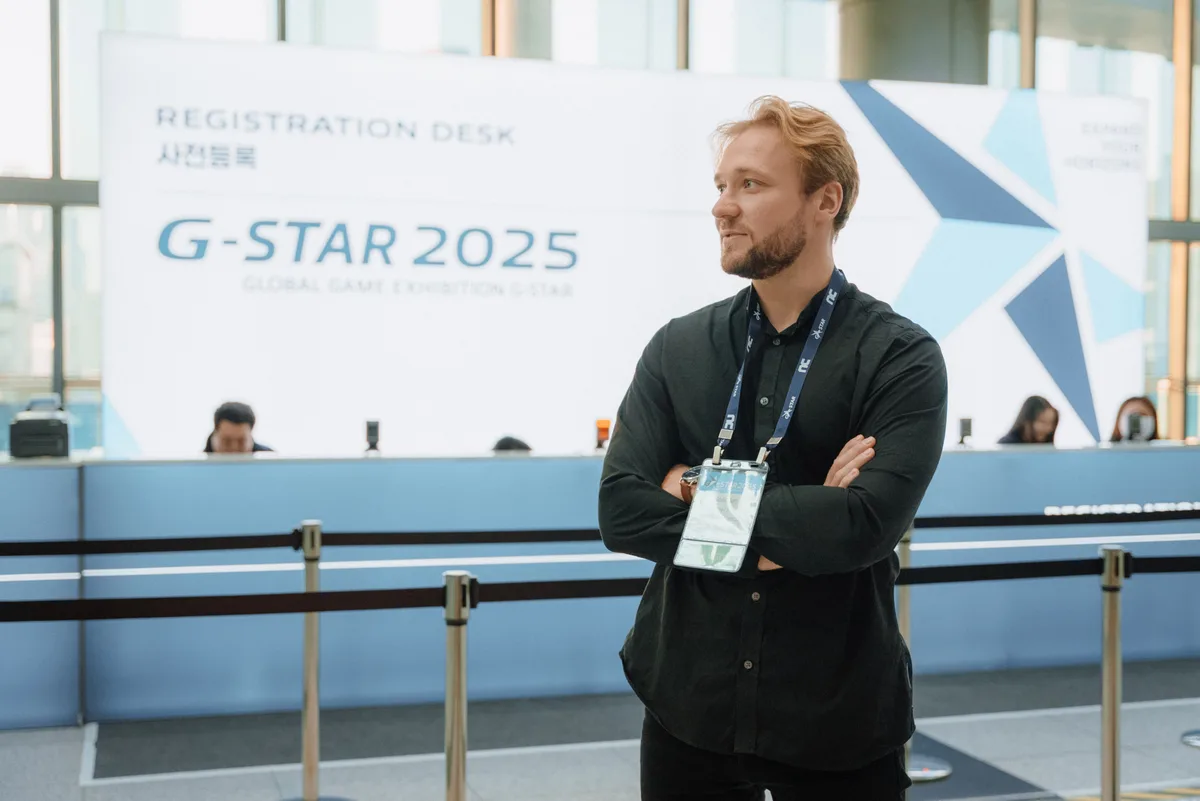
Francisk Hanchar
Founder, FogLine Visuals
Francisk Hanchar is the founder of FogLine Visuals, a video production company in San Francisco. He produces video podcasts, launch videos and event coverage for startups, and hosts The Bay Signal.
About FogLine