Back to Blog
February 8, 20269 min readFogLine Visuals Team

How to Prepare for Your First Professional Video Shoot: A Complete Guide

Everything you need to know before your first video production, from defining goals and scripting to location prep, wardrobe tips, and what to expect on shoot day.

How to Prepare for Your First Professional Video Shoot: A Complete Guide

So you've decided to invest in professional video for your business. Congratulations—it's one of the smartest marketing decisions you can make. But if you've never been through a professional video shoot before, the process might feel intimidating.

Don't worry. With the right preparation, your shoot day will be smooth, productive, and maybe even fun. This guide covers everything you need to know before, during, and after your first professional video production.

Before the Shoot: Laying the Groundwork

Define Your Goals Clearly

Before anything else, get crystal clear on what you want this video to accomplish. Ask yourself:

What action do I want viewers to take after watching?

Who is the primary audience for this content?

Where will this video live (website, social media, presentations)?

How does this fit into our broader marketing strategy?

The more specific you can be, the better your production team can deliver what you actually need. "We need a video" is not a goal. "We need a 60-second product demo that helps our sales team close more enterprise deals" is a goal.

Establish Your Key Messages

What are the 2-3 things viewers absolutely must remember? Your video can't say everything. Prioritize ruthlessly.

Write these messages down and share them with your production team. Every creative decision should support these core messages.

Determine Your Budget

Be upfront about your budget with production companies. This helps them propose solutions that match your investment level rather than pitching something unrealistic.

Budget affects:

Shoot duration

Crew size

Equipment level

Number of deliverables

Post-production complexity

A good production company will work with your budget to maximize value, not try to upsell you on things you don't need.

Choose the Right Production Partner

Not all video production companies are the same. When evaluating partners, consider:

Portfolio: Do they have experience with content similar to what you need?

Process: How do they work? What's their communication style?

Pricing: Is it transparent and reasonable for your market?

Personality: Do you actually like working with them?

Don't just go with the cheapest option or the biggest name. Find a partner who understands your goals and communicates well.

Pre-Production: Getting Ready

Scripting and Messaging

Depending on your video type, you may need a full script or just a general outline with talking points.

**For scripted content** (voiceovers, promotional videos):

Write conversationally, not formally

Keep sentences short

Read it out loud—if it sounds weird spoken, rewrite it

Include visual direction alongside the script

**For interview content** (testimonials, founder videos):

Prepare a list of questions in advance

Share questions with participants so they can prepare

Don't script exact answers—aim for authentic responses

Prepare more questions than you'll use to give the editor options

Location Scouting

Your location significantly impacts the final video. Whether you're filming at your office or another location, consider:

Lighting: Is there natural light? Where does it come from?

Sound: Is the space noisy? HVAC, traffic, or other ambient noise?

Space: Is there room for equipment and crew?

Background: What will be visible behind the subject?

Power: Are there adequate outlets for equipment?

Permissions: Do you have authority to film there?

Walk through the space with your production team before shoot day. They can identify potential issues and plan accordingly.

Wardrobe and Appearance

What you wear on camera matters more than you might think.

Do:

Wear solid colors (navy, charcoal, muted tones work well)

Dress appropriately for your brand and audience

Bring options so you can adjust on the day

Keep accessories simple

Don't:

Wear busy patterns or small stripes (they create visual distortion)

Wear all white or all black (lighting challenges)

Wear logos or branded items unless intentional

Wear anything uncomfortable—it shows on camera

If multiple people are on camera, coordinate outfits in advance. You want visual harmony, not matching.

Prepare Your Participants

If others from your team will be on camera, set them up for success:

Brief them on the goals and key messages

Share any questions or talking points in advance

Give them time to prepare—don't spring it on them

Reassure them that mistakes are okay (that's what editing is for)

Remind them it's a conversation, not a performance

Handle Logistics

In the days before your shoot, confirm:

Shoot date, call time, and location

Who needs to be where and when

Parking and access instructions for the crew

Any props, products, or materials needed

Catering or meals if it's a full-day shoot

Contact information for key decision-makers

Send a detailed logistics email to everyone involved at least 2-3 days before the shoot.

Shoot Day: What to Expect

The Morning Setup

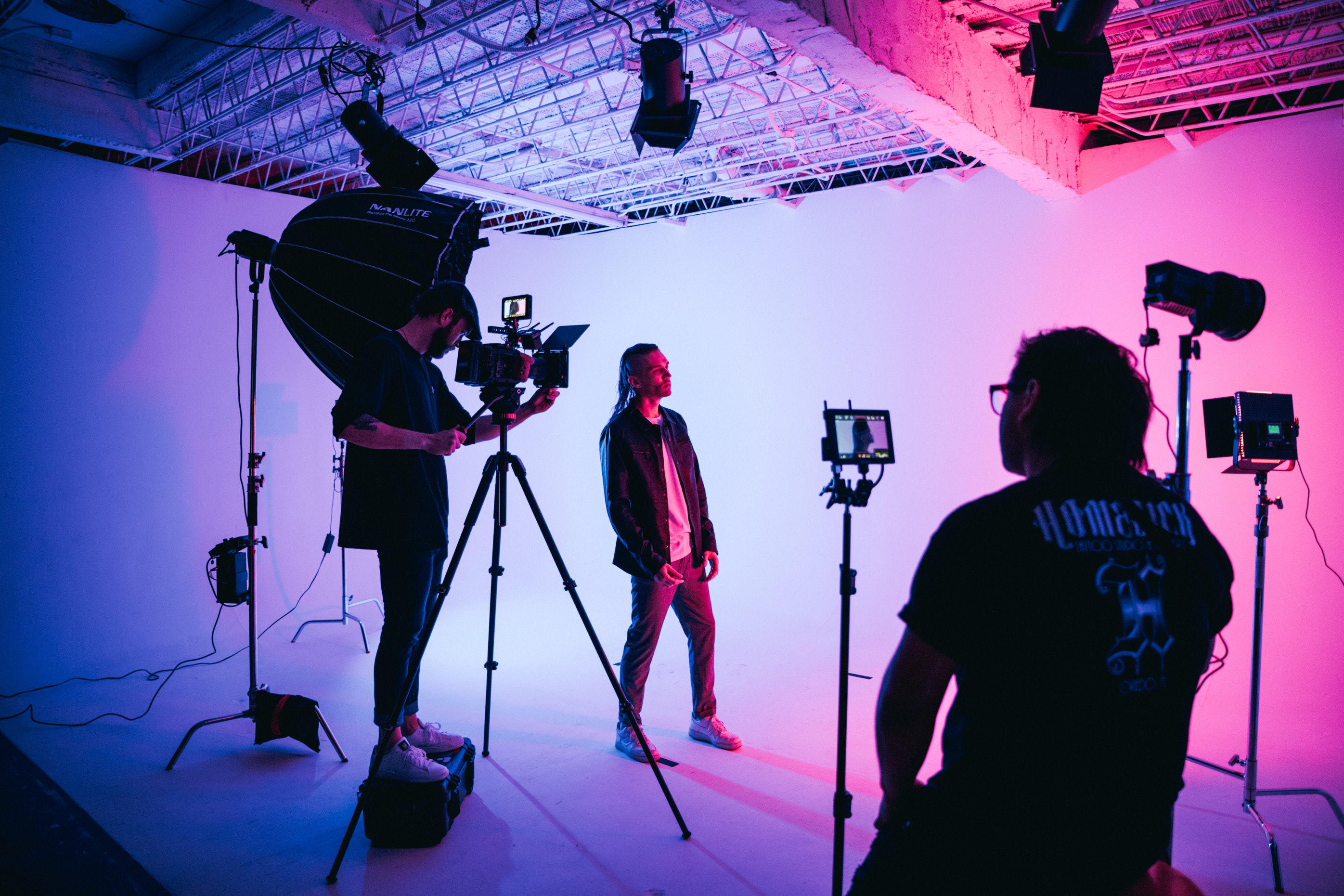
The crew will arrive before the scheduled start time to set up. This typically includes:

Lighting setup

Audio setup

Camera positioning

Backdrop or set dressing

Technical tests

Expect this to take 30-60 minutes depending on complexity. This is normal—don't rush it.

During Filming

Here's what the actual filming process looks like:

**Director's Role**: The director (or lead videographer) will guide the shoot, positioning subjects, directing their delivery, and ensuring the shot list is covered.

**Multiple Takes**: Expect to do most things multiple times. This gives the editor options and ensures you capture the best performance. Don't get frustrated with repetition.

**Breaks**: You'll take breaks between setups. Use this time to review footage, hydrate, and regroup.

**On-Camera Tips**:

Look at the interviewer (not the camera) unless directed otherwise

Pause before answering questions—this creates clean edit points

If you stumble, just start the sentence over

Speak slightly slower than feels natural

Try to forget the camera is there

Being a Good Client on Set

Your production team is there to make you look great. Help them help you:

Trust their expertise on technical decisions

Provide feedback clearly and promptly

Be decisive—shoot days move fast

Stay positive even if things aren't perfect

Keep unnecessary people off set

Expect the Unexpected

Something will go wrong. A plane will fly overhead during your best take. Someone will forget their talking points. The lighting will need adjustment.

This is normal. Professional crews deal with challenges all day. Stay flexible and trust that they'll figure it out.

Post-Production: From Footage to Finished Video

The Editing Process

After the shoot, your production team will:

1. **Organize and review footage**: They'll log everything shot and identify the best takes.

2. **Create a rough cut**: A first pass that establishes structure and timing.

3. **Send for review**: You'll receive the rough cut for feedback.

4. **Revision rounds**: Based on your feedback, they'll refine the edit.

5. **Final polish**: Color correction, audio mixing, graphics, and music are finalized.

6. **Delivery**: You receive your finished video(s) in the specified formats.

Giving Good Feedback

When reviewing edits, be specific:

**Less helpful**: "The middle part feels off." **More helpful**: "At 0:45, the transition feels abrupt. Can we smooth that out?"

Focus on:

Pacing and flow

Message clarity

Specific moments that work or don't work

Any factual errors

Avoid redesigning the video in revision. If you want something fundamentally different from what was planned, expect that to require additional budget and time.

Turnaround Times

Standard turnaround for a first cut is typically 1-2 weeks after filming. Final delivery depends on the number of revision rounds and project complexity. Discuss timelines with your production partner upfront.

After Delivery: Maximizing Your Investment

Getting a great video is just the start. Now you need to use it.

Optimize for Each Platform

Your production company can deliver different versions for different platforms:

Landscape (16:9) for YouTube and websites

Square (1:1) for feed posts

Vertical (9:16) for Stories, Reels, and TikTok

Create Supporting Content

From your main video, you can often extract:

Short clips for social media

Still images and thumbnails

Pull quotes for graphics

Audio for podcasts

Track Performance

Monitor how your video performs:

View counts and watch time

Engagement metrics (likes, comments, shares)

Click-through rates if driving to a landing page

Conversion data if tracking leads or sales

Use this data to inform future video projects.

Common First-Timer Mistakes to Avoid

1. **Over-scripting**: Sounding natural matters more than perfect wording. 2. **Too many stakeholders**: Limit who has approval authority. 3. **Last-minute changes**: Plan well and stick to the plan. 4. **Expecting perfection on take one**: Be patient with the process. 5. **Focusing on what you don't like**: Appreciate what's working. 6. **Not preparing participants**: Brief everyone who will be on camera. 7. **Underestimating post-production**: Good editing takes time.

Ready for Your First Shoot?

Professional video production doesn't have to be stressful. With clear goals, good preparation, and the right production partner, your first shoot can be a great experience that produces content you're proud of.

At FogLine Visuals, we specialize in working with first-time video clients. We'll guide you through every step—from initial strategy to final delivery—and make sure you feel confident and prepared throughout the process.

Ready to get started? Reach out for a consultation, and let's talk about bringing your vision to life.

FL

FogLine Visuals Team

We're a San Francisco-based video production team helping Bay Area businesses create professional content that connects with their audience.

Ready to start your video project?

Let's talk about how FogLine Visuals can help your business create professional video content.